Friday Food Post! Coconut -Pt1

Let me tell you a little about young coconut.  It is an amazing eat.  You might have seen these special fruits (or seeds or nuts, whichever you prefer to call it, because they’re all correct) at the grocery store, but been intimidated by the fibrous fortress that protects the treasure inside.

thaicoconut

First, it really isn’t all that hard to open as long as you have a decent chef’s knife or cleaver. You can find a quick instructional video here.
 
One of the most satisfying things to do with a young coconut is open it up, drink the juice and then scoop out the meat. That is one serious treat, right there.
But what about other forms of coconut? Milk, dehydrated, freeze dried?  They’re all super tasty AND good for you!
So, why do you want to consume coconut?  According to the Coconut Research Center in Colorado Springs, here’s a list of reasons:
 
 Digestive Benefits

  • Improves digestion and absorption of other nutrients including vitamins, minerals, and amino acids.
  • Improves insulin secretion and utilization of blood glucose.
  • Relieves stress on pancreas and enzyme systems of the body.
  • Reduces symptoms associated with pancreatitis.
  • Helps relieve symptoms and reduce health risks associated with diabetes.
  • Reduces problems associated with malabsorption syndrome and cystic fibrosis.
  • Improves calcium and magnesium absorption and supports the development of strong bones and teeth.
  • Relieves symptoms associated with Crohn’s disease, ulcerative colitis, and stomach ulcers.
  • Improves digestion and bowel function.

 
Skin and Hair Benefits

  • Supports tissue healing and repair.
  • Applied topically helps to form a chemical barrier on the skin to ward of infection.
  • Reduces symptoms associated the psoriasis, eczema, and dermatitis.
  • Supports the natural chemical balance of the skin.
  • Softens skin and helps relieve dryness and flaking.
  • Prevents wrinkles, sagging skin, and age spots.
  • Promotes healthy looking hair and complexion.
  • Provides protection from damaging effects of ultraviolet radiation from the sun.
  • Helps control dandruff.

Seasonal Benefits

  • Reduces inflammation.
  • Supports and aids immune system function.
  • Kills viruses that cause influenza, herpes, measles, hepatitis C, SARS, AIDS, and other illnesses.

Antimicrobial Benefits

  • Kills bacteria that cause ulcers, throat infections, urinary tract infections, gum disease and cavities, pneumonia, and gonorrhea, and other diseases.
  • Kills fungi and yeasts that cause candidiasis, ringworm, athlete’s foot, thrush, diaper rash, and other infections.
  • Expels or kills tapeworms, lice, giardia, and other parasites.
  • Helps prevent periodontal disease and tooth decay.

Healthy Weight Benefits

  • Is lower in calories than all other fats.
  • Supports thyroid function.
  • Promotes loss of excess weight by increasing metabolic rate.
  • Is utilized by the body to produce energy in preference to being stored as body fat like other dietary fats.
  • Helps prevent obesity and overweight problems.
  • Provides a nutritional source of quick energy.
  • Boosts energy and endurance, enhancing physical and athletic performance.
  • Improves utilization of essential fatty acids and protects them from oxidation.
  • Is heart healthy; improves cholesterol ratio reducing risk of heart disease.
  • Protects arteries from injury that causes atherosclerosis and thus protects against heart disease.

Additional Amazing Benefits

  • Helps relieve symptoms associated with gallbladder disease.
  • Relieves pain and irritation caused by hemorrhoids.
  • Helps protect the body from breast, colon, and other cancers.
  • Functions as a protective antioxidant.
  • Helps protect against osteoporosis.
  • Helps to protect the body from harmful free radicals that promote premature aging and degenerative disease.
  • Does not deplete the body’s antioxidant reserves like other oils do.
  • Helps relieve symptoms associated with chronic fatigue syndrome.
  • Relieves symptoms associated with benign prostatic hyperplasia (prostate enlargement).
  • Reduces epileptic seizures.
  • Helps protect against kidney disease and bladder infections.
  • Dissolves kidney stones.
  • Helps prevent liver disease.
  • Does not form harmful by-products when heated to normal cooking temperature like other vegetable oils do.
  • Has no harmful or discomforting side effects.
  • Is completely non-toxic to humans.

 
Need I say more?  This really is a super food.
I will tell you that one of the main concerns that modern, western dietitians have with consuming large amounts of coconut is it’s saturated fat content (100%).  Do not fret, dear readers.  Saturated fat is not the big bad wolf that the dietary authorities have led us to believe. Here is a fantastic article on healthy fats.
Over the next several weeks I’m going to do a series of Coconut Themed Friday Food Posts!  Stay Tuned!  In the mean time, go get yourself a couple of those Young Coconuts. Delish!

Friday Food Post-Garlicky Kale Salad

In the midsummer of 2011 I had a life changing experience.  Seriously! Life changing. Huge…
I was introduced to a big bowl of Garlicky Kale salad.  I know, I know. Anything involving kale isn’t generally what most people would describe as life changing. In fact, the general response I get from mentioning any recipe involving kale is “bleh.”  I want you to hear me out though.  When this salad is busted out at a gathering, you can find a group of my friends flocking around it–similarly to those seagulls in the movie Finding Nemo,  “Mine! Mine!”  (You know what I’m talking about, right?)
This salad is the perfect amount of sweet and savory, heavenly deliciousness..oh…and it’s healthy.
Kale is one of the most healthy vegetables on earth.  It has a high content of fiber, calcium, vitamin B6, and an even higher concentration of vitamins K, C and A.
It’s not just the kale that makes this recipe so healthful, the garlic, raw honey, nutritional yeast all are packed with nutrients.
I am happy that this dish is so healthy, because when I got pregnant with my second child it’s pretty much the only thing I wanted to eat. I knew that I was growing a healthy baby every time I took a bite.
Now that I have you on the edge of your seat, let me share the recipe with you!

IMG_8800

Garlicky Kale Salad (adapted from a Whole Foods original recipe)

1 Bunch of kale–Any variety, my favorite is the curly type because it drinks up the delicious dressing
2 Tablespoons tahini or peanut butter or a combination of both
2 Tablespoons lemon juice
2 Tablespoons Bragg’s liquid aminos (tamari or soy sauce would work too)
4 Tablespoons nutritional yeast– you can find this at most health food stores in the bulk section.
Several cloves of garlic (as much as you desire)
1 Tablespoon of raw honey

Place all of the ingredients (except the kale) in a blender or food processor and blend until smooth, add water a teaspoon at a time to reach your desired consistency. 
I like mine on the thick side, especially when using freshly washed kale, because the residual water on the kale makes it thin out quite a bit after you apply the dressing.

I also like to make this dressing in large batches and use it as I would hummus.

Pour dressing over the kale and use your hands to massage it into the leaves until the kale is fully coated. If you are patient enough, let it sit in the fridge for an hour to let the flavors absorb. If not, eat it and enjoy!  

You’re Welcome!

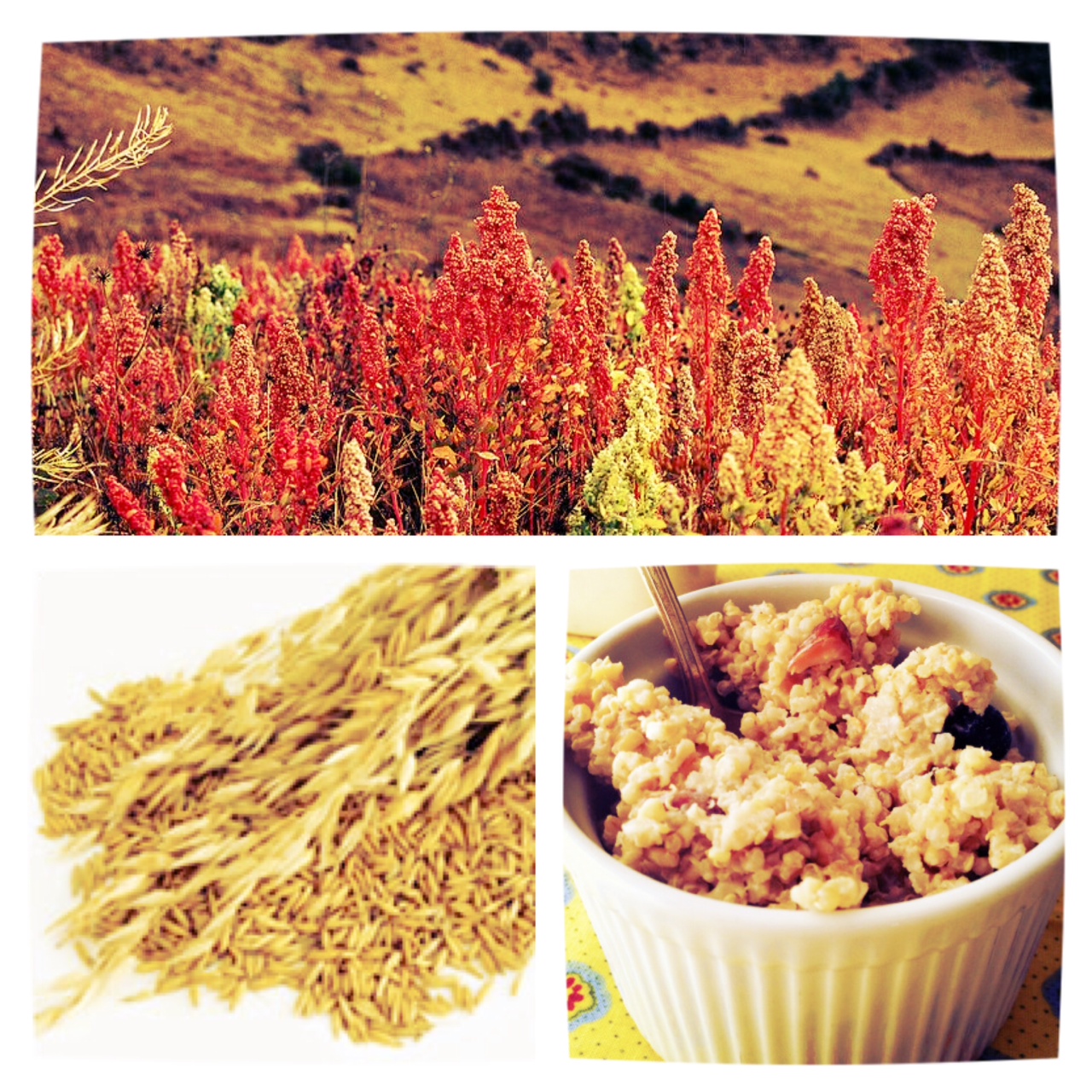
Cool Creamy Oats and Quinoa

Quinoa and Oats are good for you

This post was written by Courtney Blake, a local Placenta Encapsulator, mother, student, and friend.  Thank you so much for contributing to the Sacred Roots Community!

My older Sister is a personal chef and birth enthusiast. Her name is Mandy Unruh and her blog Mama Mandy is an amazing resource for current and future Mamas and Papas.
I am truly excited to share this recipe for Cool Creamy Oats and Quinoa with the Sacred Roots Services LLC family. The ingredients in this recipe are known to be excellent in helping mamas milk supply. That being said, you don’t have to be a Mama to indulge in this amazing hot or cold treat.
Enjoy!

Recipe adapted from The Kitchn
Makes 8 servings
1 cup steel-cut oats
1 cup quinoa (rinsed in a strainer for one minute and drained)
2 tablespoons coconut oil, divided
2 cups unsweetened vanilla almond milk
1 cup water
1 tsp pumpkin pie spice or cinnamon
1/2 tsp salt
1/3 cup maple syrup
2 droppers full liquid vanilla stevia (I prefer Whole Foods 365 brand)
1 cup Greek yogurt
1 cup roasted mixed nuts, chopped
1 cup blueberries
In a medium saucepan, melt 1 tablespoon of oil, then add the oats and quinoa and cook until grains smell toasty. Add almond milk and water. Add salt and spices. Bring to a boil, then reduce heat to low, cover and let simmer for 20 minutes. Liquid should be absorbed. Take off heat, let rest for five minutes, then uncover and fluff with a fork. Turn mixture out onto a baking sheet and let cool for 30 minutes.
Whisk together the remaining tablespoon of coconut oil, maple syrup, stevia, and yogurt. Mix in chopped nuts.
Combine grains and yogurt mixture. Gently fold in blueberries. Serve room temperature or cold. Tastes even better the next day

http://mamamandy.com/2012/06/09/cool-creamy-oats-quinoa/

The Placenta Experience

This post was written by Courtney Blake, a local Placenta Encapsulator, mother, student, and friend.  Thank you so much for contributing to the Sacred Roots Community!

Greetings! I would like to tell you about my experience with Placenta Encapsulation. I have had a very pleasant post-partum period and believe that choosing to consume my placenta via Placenta Encapsulation is a very big reason why.

It really does make sense when I think about it!

The placenta grows as the baby grows and it holds all kinds of hormones and nutrients. Where do those nutrients go after my baby is born? Well, usually the placenta is discarded or used for medical experimentation. I chose to take my placenta home and send it off for encapsulation.

My older Sister had her placenta encapsulated and encouraged me to look in to it. Our mother had terrible post-partum depression with her last pregnancy (me) and my Sister wanted to try consuming her placenta as a means of avoiding post-partum depression. Because she claimed that it worked and she was glad that she consumed her placenta, I took the steps to have mine encapsulated as well.
After doing some research, I also discovered that placenta consumption could help to prevent excessive bleeding, iron-loss, help my uterus shrink back to its normal size, increase energy, help with insomnia, and help with milk production. Why isn’t everyone doing this?  I was sold!

Placenta Capsules
I did my research, contacted a somewhat-local encapsulator and spoke with my Midwives about it at several appointments. Because I was having a hospital birth, I knew that I would have to address the hospital staff as well. When I went in to have my baby, I made sure to show my birth plan to all of the hospital staff and I even attached a separate “Placenta Plan”, that basically requested that no chemicals be put on my placenta and that is was promptly put on ice and saved for me (cord and all).
I brought my own little cooler to the hospital and arranged for my Dad to take it home and then overnight it to the encapsulator for me.
The encapsulator received my overnighted placenta, encapsulated it using the Tradtional Chinese Method and shipped my pills to me within a few days.
I figured that the capsules would help me, but I had no idea to what extent. I was skeptical, but hopeful. I took my first dose and didn’t feel a whole lot different. But after my second and third doses, I could tell that they were actually helping.
After I had Alice, I had this “cry hour”. Well actually it was a “cry three hours”. I would weep from about 5p-8p nightly, until the placenta capsules arrived. Then I noticed that my “cry hour” went away, I had more energy and was actually, truly enjoying being a new Mama.
I was so grateful. I took the capsules for about three weeks regularly and then tapered off to when I felt I needed an emotional boost. I still have some left (my placenta was huge and yielded an unusually large amount of capsules) and I still take them for those occasional, “raw” emotional days. They never fail to help.

I want to share this with all the women I possibly can because I believe that placenta consumption truly does help women in so many ways.

Many mammals (cats and dogs) do it, and yes there is argument that they only do it to keep the birthing area clean, but the hormonal aspect and replenishing the body right away with what is just lost makes complete sense to me.
I have become so passionate about placenta consumption that I have started helping women consume their own placenta by becoming a placenta encapsulator myself.  For more information see my page.